

What is piriformis tightness, and why does it matter?
Piriformis tightness occurs when the piriformis muscle, a small, flat muscle buried deep in your buttock, becomes overworked, inflamed, or spasmed and begins pressing against the sciatic nerve. The sciatic nerve is the largest nerve in the body, running from each hip down through the leg, so even minor compression there produces outsized pain. Clinically, this condition is called piriformis syndrome, and it produces a distinctive pattern of symptoms that can range from a dull ache to sharp, shooting pain radiating down the back of the leg.
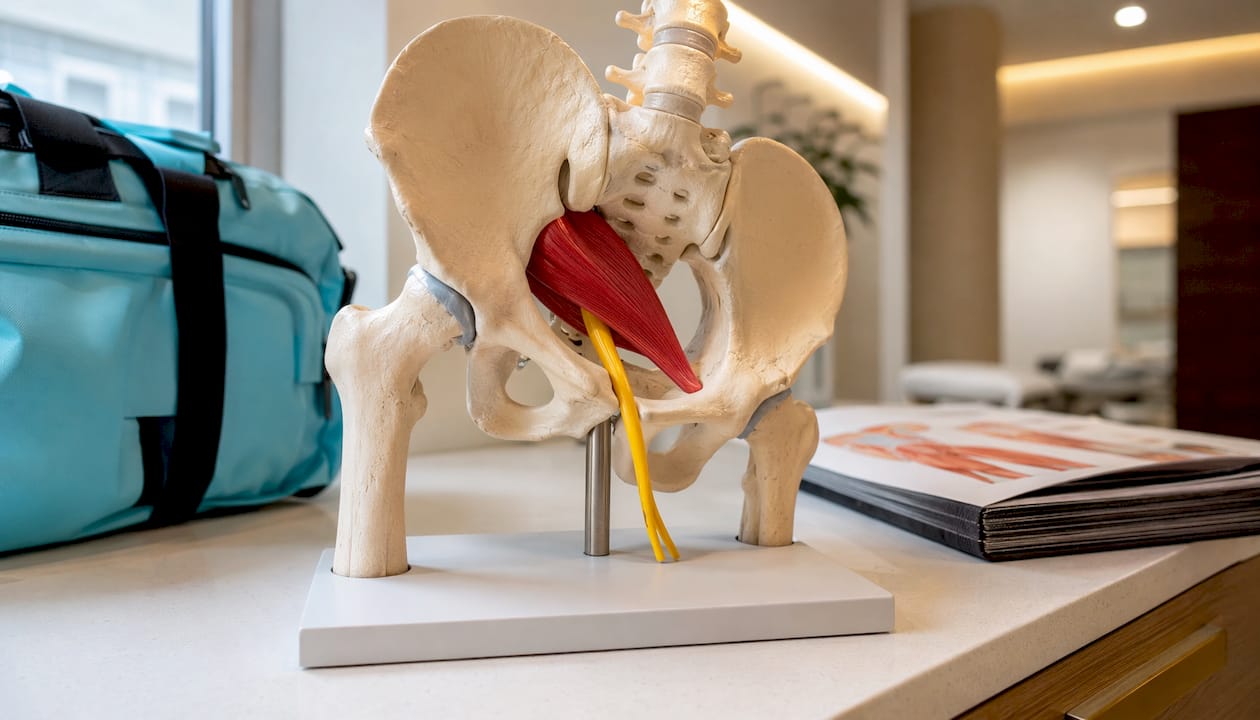
The piriformis muscle originates at the lower spine (vertebrae S2 to S4) and attaches to the top of the thigh bone. Its main job is to rotate the hip outward and stabilize the pelvis during movement. When it tightens or swells, it compresses the sciatic nerve running directly beneath it, triggering what most people describe as sciatica-like pain.
Key characteristics of piriformis syndrome include:
- Pain, numbness, or tingling concentrated in the buttock and radiating down the back of the leg
- Symptoms often worsen with prolonged sitting, climbing stairs, walking, or running
- Tenderness when pressing around the sciatic notch area of the buttock
- Possible involvement of one or both sides, though one-sided presentation is more common
- Pain that can extend into the thigh, calf, and sometimes the foot
Unlike a herniated disc, the nerve compression here happens at the level of the buttock muscle itself, not the spine. That distinction shapes everything from how it is diagnosed to how it is treated.
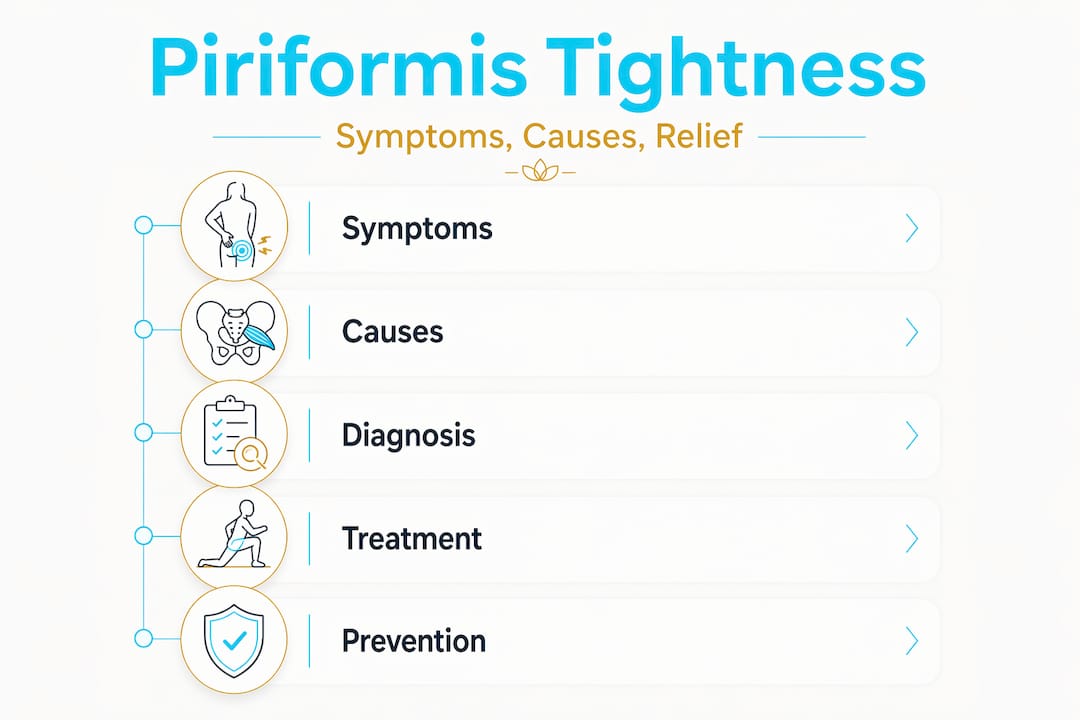
Table of Contents
- Recognizing the symptoms and causes of piriformis tightness
- How is piriformis tightness diagnosed?
- Treatment and management options for piriformis tightness
- What to expect: how long does piriformis tightness last?
- Prevention strategies to avoid piriformis tightness
- Integrating physical therapy for lasting relief
- Gilora can support your recovery from muscle tightness
- Key Takeaways
Recognizing the symptoms and causes of piriformis tightness
The pain from a tight piriformis is hard to ignore and easy to misread. Most people feel a deep, aching or burning sensation in the buttock that can shoot down the back of the thigh. Numbness and tingling along the sciatic nerve's path are common, and some people notice the discomfort flares sharply after sitting for a short period.
Symptoms to watch for:
- Aching, burning, or shooting pain in the buttock and back of the leg
- Numbness or tingling that follows the sciatic nerve distribution
- Pain that worsens when sitting, especially on hard surfaces
- Discomfort climbing stairs or rising from a seated position
- Muscle spasm or tenderness deep in the gluteal region
The causes of muscle tightness in the piriformis fall into a few clear categories. Prolonged sitting is the most common culprit, particularly for desk workers who spend hours with the hip in a fixed, flexed position. Repetitive athletic movements, especially in runners and cyclists, place chronic strain on the muscle. A direct injury to the hip or buttock, such as a fall, can trigger acute inflammation. Muscle weakness is another major driver: when the glutes and core are not pulling their weight, the piriformis compensates and eventually becomes overloaded.
Risk factors that raise your chances of developing this condition include a sedentary lifestyle, sports involving repetitive hip rotation, anatomical variations in how the sciatic nerve passes through or near the piriformis, and carrying a thick wallet in a back pocket (which tilts the pelvis during sitting).
Pro Tip: If you sit at a desk for most of the day, check your chair height and posture before assuming the problem is purely muscular. A seat that is too low forces the hip into deeper flexion, putting constant strain on the piriformis. Raising the chair so your hips sit at or slightly above knee level can reduce that load noticeably.
How is piriformis tightness diagnosed?
Diagnosis is clinical, meaning it depends primarily on your reported symptoms and what a clinician finds during a physical exam. There is no single imaging test that confirms piriformis syndrome. Instead, diagnosis is by exclusion: the clinician rules out lumbar disc herniation, spinal stenosis, and other causes of sciatica before landing on the piriformis as the source.
Diagnostic criteria and physical exam maneuvers:
- Freiberg test: The examiner passively rotates the hip inward while the patient lies flat; reproduction of buttock pain suggests piriformis involvement.
- Pace test: The patient resists the examiner pushing the knees together while seated; pain or weakness on the affected side points to the piriformis.
- Beatty test: The patient lies on their unaffected side and lifts the bent knee off the table; buttock pain on the affected side is a positive sign.
- Palpation: Direct pressure around the sciatic notch reproduces tenderness in most cases.
A key diagnostic clue from Harvard Health: pain that increases with resisted outward hip rotation is characteristic of piriformis syndrome and helps distinguish it from lumbar disc problems, where pain typically worsens with spinal flexion or straight-leg raising.
Imaging such as MRI, CT, or ultrasound is ordered mainly to rule out other pathologies, not to confirm piriformis syndrome. Magnetic resonance neurography can sometimes show sciatic nerve irritation near the sciatic notch, but it is not widely available and is still considered experimental for this purpose. The overlap with disc herniation and hip bursitis means misdiagnosis is genuinely common, which is one reason people often spend months treating the wrong problem.
Treatment and management options for piriformis tightness
Most cases respond well to conservative treatment, and the approach follows a logical sequence from rest and pain control to active rehabilitation.
Core treatment strategies:
- Short-term rest: Limiting aggravating activities for up to 48 hours reduces acute inflammation without causing deconditioning.
- NSAIDs: Anti-inflammatory medications like ibuprofen or naproxen help control pain and swelling during the acute phase.
- Piriformis stretching: The figure-four stretch (lying on your back, crossing one ankle over the opposite knee, and pulling the legs toward your chest) directly targets the piriformis. Holding for a comfortable duration and repeating several times per side is a common starting point.
- Strengthening exercises: Glute bridges, clamshells, and side-lying hip abductions address the muscle weakness that often drives piriformis overuse.
- Heat and cold: Ice packs during the first 48 hours reduce acute swelling; heat applied afterward relaxes muscle spasm.
- Massage and foam rolling: Conservative treatment includes deep-tissue massage and foam rolling on the surrounding gluteal muscles to reduce tension without direct pressure on the nerve.
- Corticosteroid injections: For persistent cases, an injection around the piriformis muscle can reduce inflammation when physical therapy alone is not enough.
- Surgery: Reserved for the rare cases where conservative treatment has genuinely failed; results are not always predictable.
Pro Tip: Do not rely on stretching alone. Stretching a piriformis that is tight because it is compensating for weak glutes will give you temporary relief but not lasting change. Pair every stretching session with at least one strengthening exercise for the hip abductors or glutes to address the root cause.
Sciatica pain relief from piriformis syndrome typically requires at least four to six weeks of consistent effort. If symptoms are not improving after three to four weeks of home treatment, a physical therapist or sports medicine physician can assess whether the program needs adjustment or whether an injection is warranted.
What to expect: how long does piriformis tightness last?
The prognosis for piriformis syndrome is generally excellent when treatment is followed consistently. Most people become symptom-free within one to three weeks after starting an exercise program, though more severe or long-standing cases take longer. The catch is that relapse is very common when exercise compliance drops or postural habits do not change.
What shapes your recovery timeline:
- Compliance with stretching and strengthening exercises is the single biggest predictor of recovery speed
- The longer symptoms go unaddressed, the longer rehabilitation tends to take
- Athletes can typically return to activity once they demonstrate full pain-free range of motion and restored strength
- Sedentary individuals who do not change their sitting habits are at high risk of recurrence
Surgery is almost never the first choice and remains debated even for refractory cases. The nerve decompression or adhesion removal it involves does not guarantee pain relief, and some patients continue to have symptoms afterward. For the vast majority of people, the path forward is physical therapy, not the operating room.
One realistic expectation worth setting: feeling better in a few weeks does not mean the underlying muscle imbalance is resolved. Many people stop their exercises the moment pain fades, then wonder why the problem returns three months later. Treating the symptom and treating the cause are two different timelines.
Prevention strategies to avoid piriformis tightness
Prevention is mostly about breaking the habits that load the piriformis in the first place. Prolonged sitting is the dominant risk factor for most people, and no amount of stretching fully compensates for eight consecutive hours in a chair.
Practical prevention steps:
- Change your sitting position regularly; stand up, walk briefly, or do a quick hip stretch
- Use a standing desk or a sit-stand workstation to vary your posture throughout the day
- Strengthen the glutes and core regularly with exercises like glute bridges, clamshells, and planks
- Warm up for 5–10 minutes before any athletic activity, focusing on hip mobility and dynamic stretching
- Avoid repetitive strain by cross-training rather than repeating the same athletic motion daily
- Ergonomic changes like adjusting chair height and lumbar support reduce chronic hip flexor and piriformis loading
Pro Tip: Remove your wallet from your back pocket before sitting for extended periods. A thick wallet creates an uneven surface under one side of the pelvis, tilting it and placing asymmetric strain on the piriformis. It sounds trivial, but Harvard Health specifically flags this as a contributing factor for people prone to piriformis problems.
For runners and cyclists, the prevention calculus includes monitoring training load increases, addressing hip weakness before it becomes a problem, and not skipping cooldown stretches after long sessions. The piriformis is a small muscle asked to do a lot; it tends to protest when volume spikes too fast.
Integrating physical therapy for lasting relief
The most common mistake people make with hip muscle tightness is treating it as a flexibility problem when it is actually a strength problem. Physical therapists at HSS consistently find that piriformis tightness often signals compensatory overuse: the piriformis is working overtime because the glutes and core are not doing their share of stabilizing the pelvis. Stretching the piriformis without addressing that weakness is like repeatedly fixing a flat tire without pulling out the nail.
A balanced physical therapy approach includes:
- Soft tissue release first: Foam rolling the glutes, hip external rotators, and surrounding musculature loosens the area before strengthening work begins.
- Progressive strengthening: Start with bodyweight glute bridges and clamshells, then advance to resistance band variations as strength improves.
- Core stability work: Planks and dead bugs build the spinal and pelvic stability that takes load off the piriformis during daily movement.
- Percussive therapy on adjacent tissue: Percussive therapy devices can help relax muscle spasms when applied to the surrounding gluteal muscles, but should never be used directly over the sciatic nerve.
- Gait and movement assessment: A physical therapist can identify compensatory movement patterns, such as hip drop during walking, that keep the piriformis under chronic stress.
Pro Tip: Use percussive therapy before stretching, not after. Applying a massage gun to the gluteal muscles for 60–90 seconds on a low-to-medium setting loosens the surrounding tissue and makes subsequent stretching more effective. Avoid placing the device directly over the center of the buttock where the sciatic nerve runs.
Consistency matters more than intensity here. A 15-minute daily routine of targeted strengthening and mobility work outperforms an occasional 60-minute session. Professional guidance is worth seeking if you are not seeing progress after four weeks of self-directed work, or if symptoms are worsening despite rest.
Gilora can support your recovery from muscle tightness
Tight glutes and a strained piriformis respond well to percussive therapy when it is applied correctly to the surrounding tissue. The Gilora massage gun was built for exactly this kind of targeted muscle relief, whether you are a desk worker dealing with chronic hip tension or a runner managing post-training soreness.

Gilora runs at under 45dB, so you can use it at your desk, in the office, or before bed without disturbing anyone. With 30 adjustable speeds and six interchangeable heads, you can dial in the right pressure for the gluteal muscles and hip area without the risk of going too hard on sensitive tissue. The six-hour battery and USB-C charging mean it is ready when you need it, and the hard-shell travel case makes it easy to bring to the gym or on a trip. At a price well below most professional-grade devices, it gives you a practical tool for daily muscle maintenance without a recurring cost. If you are ready to add percussive therapy to your recovery routine, check out the Gilora massage gun and see which attachment works best for your needs.
Key Takeaways
Piriformis tightness is a strength and posture problem as much as a flexibility one, and lasting relief requires addressing both the tight muscle and the weak muscles driving its overuse.
| Point | Details |
|---|---|
| Cause is often compensatory | The piriformis tightens when glutes and core are weak, forcing it to stabilize the pelvis alone. |
| Diagnosis is clinical | Freiberg, Pace, and Beatty tests confirm involvement; imaging rules out disc or spinal causes. |
| Recovery takes weeks | Most people become symptom-free within one to three weeks of consistent exercise, but relapse is common without continued effort. |
| Prevention centers on movement | Changing position every 30–45 minutes and strengthening the hips reduces recurrence risk more than stretching alone. |
| Gilora supports daily relief | The Gilora massage gun applies percussive therapy to surrounding gluteal tissue, easing spasm as part of a balanced recovery routine. |